RoboLynk Lite
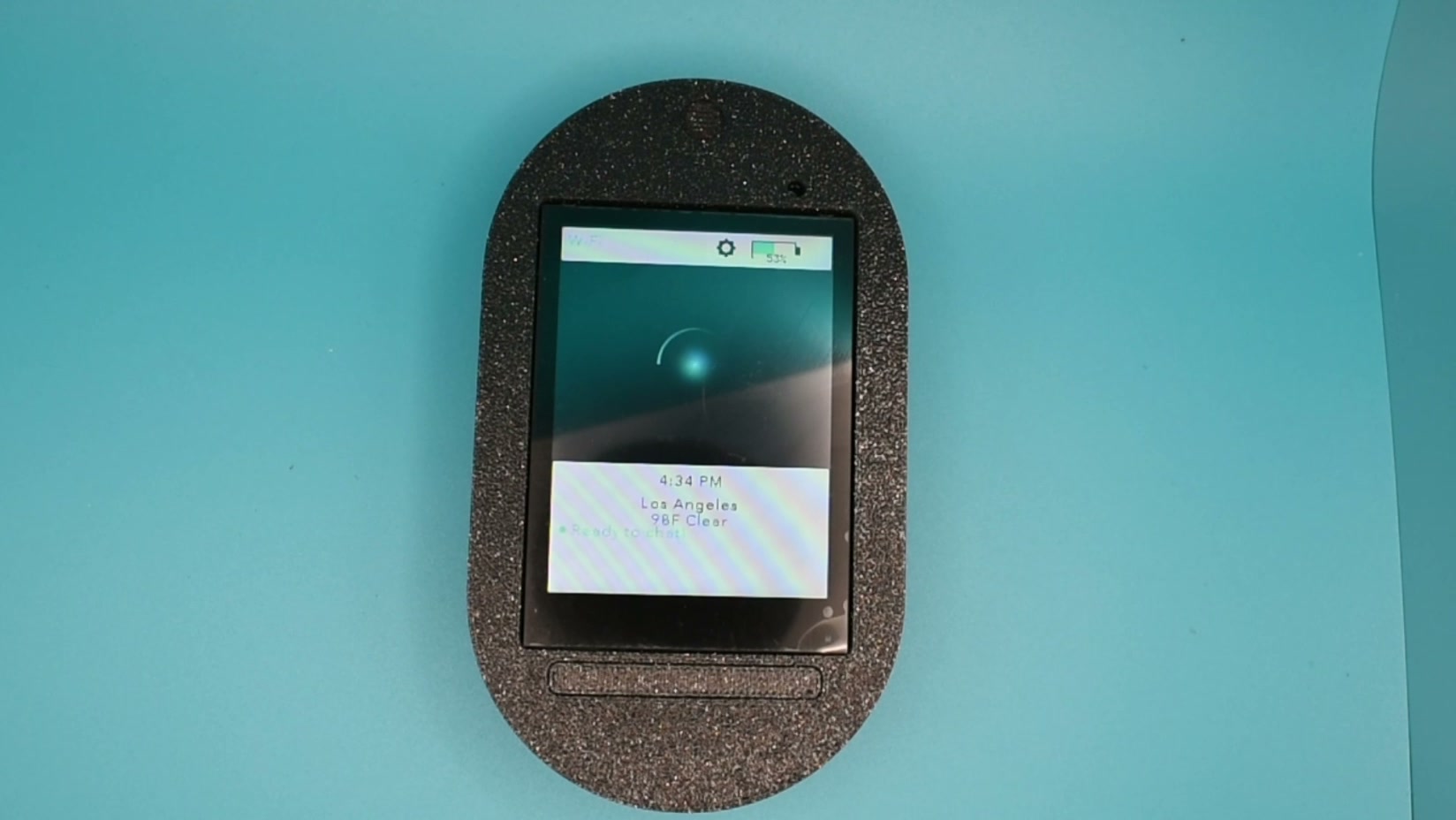
A palm-sized desk robot you hold to talk to. Press the screen, ask a question, let go — it answers out loud, shows a face while it speaks, sets alarms and turns your lights off when you say good night.
You build it yourself, from an off-the-shelf board and a printed case. About ten minutes of hands-on work, plus an hour and twenty minutes of printing you can leave running. The firmware flashes straight from a web page — no toolchain, no IDE, nothing to install.
What it does
- Hold-to-talk voice chat — it remembers the last few messages, so follow-up questions work.
- An animated face while it speaks.
- Alarms and timers by voice.
- Philips Hue control — “turn on the lights”, “dim the bedroom”, “lights to 50%”.
- Wi-Fi setup from your phone. The robot raises its own hotspot and serves a page. No keyboard, no hard-coded passwords.
- It updates itself over Wi-Fi.
- A built-in lamp and an SOS signal that need no network at all. Tap the top-left of the screen for the light; hold it three seconds for SOS.
Reminders and alarms are a convenience feature. Don’t rely on them for anything that matters medically.
What you need
| Part | Notes |
|---|---|
| 2.8″ touchscreen dev board | Specific model — the guide names it. Others look identical and won’t work. |
| 630 mAh LiPo battery | 3.7 V, JST-PH, with protection. Charges over the board’s USB-C. |
| 3D-printed case | Four parts, PETG or PLA, no supports. Files are free. |
| 4 × M2 inserts and screws | A soldering iron presses the inserts in — that’s the only “soldering”. |
Honest about the limits
The speech and language work doesn’t happen on the board. Lite talks to a RoboLynk server, so it needs a free account and an internet connection to hold a conversation. The lamp, the SOS signal, the clock and the alarms keep working without either.
The firmware is free to use on your own device and ships as a single image. The case files and the build guide are CC BY-SA 4.0 — build it, change it, sell what you make.
Would rather not build one? RoboFoxy is the finished product — assembled, with a bigger screen, a real face and more of the software switched on. Lite is the same idea you can make yourself in an afternoon.
Read how it was built
Three embedded audio bugs that looked like hardware limits — the first word of every question went missing, the capture loop caught a quarter of real time, and speech stuttered. None of it was the hardware.